25+ years of enterprise HR, organizational development, capability and transformation experience
 ™
Tapas Advisory
ERP transformations fail at adoption.
TAPAS Advisory is a Bengaluru consulting firm that helps enterprise and GCC leaders make AI and ERP transformation succeed at adoption. Founded by Ram Narayanan, it diagnoses change readiness with CHANGEReadyX™ before spend is committed, then redesigns operating models, leadership and workforce capability around the change.
ERP transformation and operating-model change, designed around people.
Designing organizations thatlearn, transform, and lead the future.
Bengaluru, Karnataka, India
A founder’s view
“True transformation doesn't begin with technology or process—it begins with people. When individuals grow, organizations evolve, and when organizations evolve, industries are redefined.”— Ram Narayanan
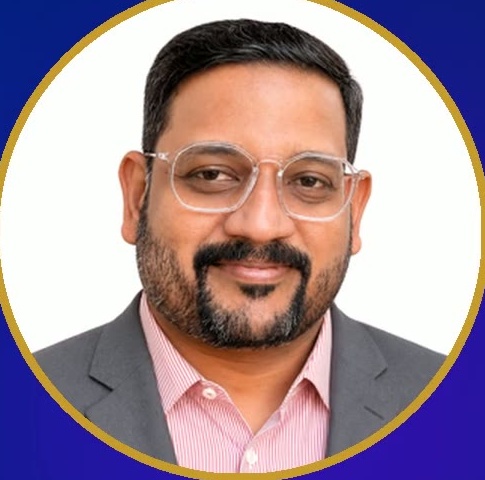
Ram NarayananTransformation Leader
- 25+ years of enterprise HR, organizational development, capability and transformation experience
- Viatris
- Johnson & Johnson
- Merck
- PROSCI ADKAR®
- Hogan Certified
- 7,500+ employees enabled
Evidence of impact
The evidence: 7,500+ employees enabled across enterprise programmes
Employees enabled across diverse global footprints
Legacy learning vendors consolidated
Strategic learning platforms
Reduction in content creation cycle time
These are TAPAS Advisory's own figures, from programmes led by Ram Narayanan — not industry estimates.
Provenance of these figures
Outcomes reflect enterprise programmes led by Ram Narayanan through 25+ years of enterprise HR, organizational development, capability and transformation experience. They are presented as professional career achievements, not as Tapas Advisory client engagements.
Client endorsements available on request
Foundational philosophy
AI transformation isn’t a technology program. It’s a human capital transformation.
Redesign the operating model around people, leadership, workflows and decisions — then apply AI.
AI does not fail on models. It fails on readiness.
47seconds
Average attention on a screen
A CHRO, a board director and a next-generation manager each give a transformation case about 47 seconds before they disengage. Most programmes answer with a 300-page roadmap.
Dr. Gloria Mark, University of California, Irvine47sec
Executive attention window
Down from 2.5 minutes two decades ago. The case for change must land first, not last.
70%
Transformations that fall short of their goals
Employee resistance and unsupportive management behaviour are the leading causes cited.
McKinsey & Company, “How to beat the transformation odds” (2015)24signals
Evidence statements in the diagnostic
Six per pillar. Completed in minutes, not workshops.
90days
Accelerator sprint cadence
Diagnose, intervene, re-measure — inside a single quarter.
The three structural traps
Three traps stall transformation — and each one has a fix
Transformations fail at adoption, not at go-live.
Technology lands. Behaviour does not.
AI and ERP investments stall at adoption, where cultural resistance and unclear decision rights sit.
The fix
Diagnose capacity to absorb change before further capital is committed.
90-day sprint example · Adoption recovery sprint
- Days 1–30: Run the 24-signal diagnostic across sponsor, manager and user groups; map decision rights.
- Days 31–60: Charter manager change pods; fix the three highest-friction hand-offs.
- Days 61–90: Reinforce through coaching huddles; re-measure adoption signals.
Success measure: active-use and process-compliance signals re-measured at day 90.
AI creates capacity. Leadership decides what it becomes.
The same released hours can be extracted as more routine work or reinvested as innovation.
The fix
Redesign the operating model so capacity converts into decision quality and growth.
90-day sprint example · Capacity reinvestment sprint
- Days 1–30: Baseline released hours per workflow; agree reinvestment priorities with the executive sponsor.
- Days 31–60: Redesign human–AI workflows with explicit decision gates and owners.
- Days 61–90: Redeploy capacity into named innovation and customer initiatives; report to steering.
Success measure: share of released hours redeployed to agreed priorities.
Attention is the scarcest executive resource.
Screen attention now averages 47 seconds, so dense change narratives are skipped entirely.
The fix
Lead with evidence a board can read in one glance, then go deep on request.
90-day sprint example · Board evidence sprint
- Days 1–30: Define five board-level transformation signals and their owners.
- Days 31–60: Build a one-page evidence dashboard for steering and Board NRC.
- Days 61–90: Replace narrative status packs with the dashboard; review quarterly.
Success measure: decisions taken per steering session against the dashboard.
90-day sprints
Diagnose, intervene, re-measure in one quarter.
- Days 1–30Run the 24-signal diagnostic across sponsor, manager and user groups; map decision rights.
- Days 31–60Charter manager change pods; fix the three highest-friction hand-offs.
- Days 61–90Reinforce through coaching huddles; re-measure adoption signals.
Success measure Success measure: active-use and process-compliance signals re-measured at day 90.
- Days 1–30Baseline released hours per workflow; agree reinvestment priorities with the executive sponsor.
- Days 31–60Redesign human–AI workflows with explicit decision gates and owners.
- Days 61–90Redeploy capacity into named innovation and customer initiatives; report to steering.
Success measure Success measure: share of released hours redeployed to agreed priorities.
- Days 1–30Define five board-level transformation signals and their owners.
- Days 31–60Build a one-page evidence dashboard for steering and Board NRC.
- Days 61–90Replace narrative status packs with the dashboard; review quarterly.
Success measure Success measure: decisions taken per steering session against the dashboard.
The shift in sequence
People and the operating model lead; technology follows
Old sequenceTechnologyTrainingAdoption
CHANGEReadyX™ sequence — people and operating model lead, technology enables.
Purpose
Why the change exists in business terms.
Human capital
Capability, roles and workforce readiness.
Leadership
Sponsorship, decision behaviour, visible ownership.
Workflow redesign
Work re-cut around human–AI collaboration.
Decision intelligence
Decision rights, evidence and cadence.
AI enablement
Technology applied to redesigned work, not layered on it.
Business value
Measured outcomes, sustained after go-live.
The AI transformation triangle
Three pillars. One operating system.
Target Operating Model (TOM™)
Redesign decision rights, workflows, governance, roles and accountability for human–AI collaboration.
- Decision rights and escalation paths
- Workflow and hand-off redesign
- Governance cadence and controls
- Role and accountability clarity
Prosci ADKAR® aligned change management
Move people deliberately through Awareness, Desire, Knowledge, Ability and Reinforcement rather than relying on communication alone.
- Awareness — the case for change
- Desire — personal reason to engage
- Knowledge and Ability — capability in the flow of work
- Reinforcement — behaviour that holds after go-live
Human capital
Build AI-capable leaders and managers, reskilling pathways, workforce experience and continuous organisational capability.
- AI-capable leadership and manager uplift
- Reskilling and capability pathways
- Workforce experience and trust
- Continuous learning architecture
The conventional question
“How much work can AI remove?”
The Tapas Advisory question
“How much human potential can AI unlock?”
Reinvest released capacity into innovation, customer value and leadership capability.
The strategy interlink
Strategy sets the destination. Transformation captures the value.
Tapas Advisory works at the intersection — with a diagnostic-first pathway, not a generic pitch.
The destination
The strategic intent
Where the business has decided enterprise value lies — the commitment the board has already made.
Includes
- Global shared services and GCC expansion
- GenAI and enterprise digital deployment
- Enterprise ERP and platform migration
- Post-merger synergy realisation
The readiness gate
The TII™ diagnostic bridge
An objective measure of organizational capacity to absorb change before further investment is committed.
Includes
- Cognitive & learning agility — 30%
- Human–AI collaboration maturity — 25%
- Ethical & cultural resilience — 20%
- Execution velocity — 25%
The value capture
The targeted transformation
Precision interventions that de-risk the investment and convert capability into measured delivery.
Includes
- 90-Day Transformation Accelerator sprints
- WISL™ leadership coaching
- Capability intelligence engines
- Target operating model redesign
Flagship diagnostic · the CHANGEReadyX™ Diagnostic Engine
CHANGEReadyX™ — the entry point to every engagement.
A change readiness and workforce diagnostic that surfaces organizational readiness, people risk, leadership alignment and adoption barriers before transformation spend is committed.
Change
- Change readiness
- Stakeholder alignment
- Adoption barriers
People
- Leadership readiness
- Talent alignment
- Behavioral dynamics
Capability
- Critical skills
- Capability gaps
- Manager effectiveness
Adoption
- Change adoption
- Reinforcement
- Sustainability
Instant diagnostic signal · two taps
Pick your strategy and your bottleneck. See where the risk concentrates.
Select a strategic objective and your dominant hurdle to see which Transformation Intelligence Index pillar carries the most risk.
24 signals · six per pillar
Inspect the evidence behind every pillar.
Hover or focus a signal to read it. Click or tap to open the focus view.
The Tapas Advisory transformation model
Diagnose → Design → Enable → Adopt → Measure
Diagnose
Identify organizational, leadership and capability barriers.
Design
Architect targeted interventions around business priorities.
Enable
Build leadership, talent and capability systems.
Adopt
Embed behavioral change into workflows and management routines.
Measure
Track adoption, capability and business impact.
Diagnostic-first pathway
Diagnose before you invest.
Diagnose before you invest.
Diagnose
CHANGEReadyX™ Assessment
Understand organizational readiness and transformation risk.
Start AssessmentInterpret
Executive CHANGEReadyX™ Briefing
Review diagnostic signals and identify the highest-priority intervention areas.
Book BriefingTransform
Tapas Advisory Engagement
Convert diagnostic insight into a measurable transformation roadmap.
Discuss Your Challenge
Proprietary intellectual property
Four proprietary assets make the advisory repeatable
CHANGEReadyX™
Change Readiness & Workforce Diagnostic
Explore CHANGEReadyX™Details
Used to identify organizational readiness, people risks, leadership alignment and adoption barriers before transformation spend is committed.
WISL™
Workplace Integrated Situational Leadership
Details
A practical leadership architecture that embeds adaptive coaching into management routines, business priorities and daily execution.
Assess → Diagnose → Adapt → Coach → Reinforce
Capability Intelligence Engine
AI-enabled capability architecture
Details
Connects business strategy to measurable capability so learning investment is traceable to performance.
Business Strategy → Skills → Assessment → Learning → Practice → Performance
Technology context
Designed to work alongside modern learning and AI technologies — including authoring suites such as Articulate 360, AI video generation such as HeyGen, learning platforms such as Docebo, AI coaching and analytics tooling — to support personalized learning, skill-gap detection and capability measurement.
Technology references describe categories of tooling used in enterprise practice. They do not imply partnership, endorsement or pre-built integration.
L&D COE Architecture
Internal learning ecosystems
Details
Helps organizations build internal, scalable learning capability rather than remain dependent on fragmented external vendors.
Advisory services
Services are framed by the business problem, not the service line
- Change readiness
- ADKAR-aligned change architecture
- Stakeholder engagement
- Adoption strategy
- Change capability
- Leadership development
- Manager effectiveness
- Talent architecture
- Succession readiness
- Behavioral capability
- Capability frameworks
- Skill-gap diagnostics
- AI-enabled learning
- Learning journeys
- Performance support
- L&D strategy
- L&D COE architecture
- Learning ecosystem design
- Vendor optimization
- Digital learning transformation
- GCC capability architecture
- Leadership pipelines
- Talent transformation
- Workforce readiness
- Culture and organizational effectiveness
Case studies
Challenge → Diagnosis → Intervention → Scale → Outcome.
- Challenge
- 20+ fragmented legacy vendors and a ₹1 Cr annual learning ecosystem.
- Diagnosis
- Spend was distributed across overlapping vendors with no shared capability taxonomy or consolidated usage data.
- Intervention
- Strategic consolidation and platform rationalization against a single capability architecture.
- Scale
- Enterprise learning estate across multiple business functions.
- Outcome
- 9 unified strategic learning platforms.
- Challenge
- High external dependency and slow content-production cycles.
- Diagnosis
- Content demand outpaced vendor throughput; no internal development capability existed.
- Intervention
- Built internal development capability and certified 30+ developers.
- Scale
- Global L&D centre of excellence operating across regions.
- Outcome
- 50% reduction in content-creation cycle time.
- Challenge
- A global capability centre scaling rapidly with inconsistent role definitions and no shared view of critical skills.
- Diagnosis
- Hiring, learning and career frameworks each used different role language, so leaders could not see where capability was thin or duplicated across towers.
- Intervention
- Designed a single capability architecture — role families, proficiency levels and critical-skill definitions — and connected it to learning pathways, internal mobility and workforce planning reviews.
- Scale
- Multi-tower global capability centre spanning technology, operations and enabling functions.
- Outcome
- One capability language across hiring, development and mobility, with capability gaps reviewed as a standing leadership agenda item.
- Challenge
- An enterprise platform rollout across multiple countries where adoption stalled after go-live despite completed training.
- Diagnosis
- Readiness had been measured as training completion rather than behaviour change; frontline managers had no practical role in the change and no visibility of local adoption signals.
- Intervention
- Introduced manager-led change routines, a behaviour-based readiness measure, targeted interventions for the lowest-readiness groups, and a 90-day adoption cadence with named owners.
- Scale
- Multi-country workforce across several business units and shared-service teams.
- Outcome
- Adoption tracked by observed behaviour rather than course completion, with slow-moving groups identified and supported within each 90-day cycle.
The architect
Ram Narayanan: 25+ years inside enterprise transformation
Profile
Founder of Tapas Advisory and architect of CHANGEReadyX™, WISL™ and the Capability Intelligence Engine. He brings 25+ years of enterprise HR, organizational development, capability and transformation experience across global pharmaceutical, consumer and GCC organizations — advisory shaped by operating inside transformation, not observing it.
Enterprise experience
- Viatris
- Johnson & Johnson
- Merck
Credentials
- PROSCI / ADKAR Change Practitioner
- Hogan Certified
- Hogan 360
- Everything DiSC Practitioner
- SLII Practitioner
- Google Agile Project Management
- Stanford Organizational Analysis
- IIMA Leadership Skills
Ram Narayanan – Transformation Leader
Why Tapas Advisory
Operator Perspective
Enterprise experience, not purely theoretical consulting.
Evidence-Based OD
Behavioral science and structured diagnostics.
Proprietary IP
CHANGEReadyX™, WISL™ and the Capability Intelligence Engine.
AI-Enabled
Modern AI, digital learning and capability technologies.
Measurement First
Every intervention connects to adoption, capability, behavior or business outcomes.
CHANGEReadyX™ diagnostic
Diagnose before you invest.
Take the CHANGEReadyX™ diagnosticExecutive diagnostic intake
Start with the business problem.
A structured intake so the first conversation begins with your transformation context, not a generic consulting pitch.
Last reviewed:
Frequently asked questions
TAPAS Advisory helps enterprise and GCC leaders make AI and ERP transformation succeed at adoption. It diagnoses change readiness first, then redesigns operating models, leadership and workforce capability around the change.
CHANGEReadyX™ is TAPAS Advisory's diagnostic-led transformation readiness framework, created by Ram Narayanan. It investigates whether strategy, leadership, governance, people, processes and technology are prepared for changed ways of working, before transformation spend is committed.
The Transformation Intelligence Index (TII™) is the evidence-based readiness score produced through the full CHANGEReadyX™ diagnostic engagement, across four weighted pillars: Cognitive & Learning Agility 30%, Human–AI Collaboration Maturity 25%, Execution Velocity 25%, and Ethical & Cultural Resilience 20%.
Ram Narayanan, Transformation Leader — 25+ years of enterprise HR, organizational development and transformation leadership at Viatris, Johnson & Johnson and Merck; PROSCI Change Practitioner (ADKAR) and Hogan Certified.
With the CHANGEReadyX™ diagnostic at tapasadvisory.com/diagnostic, followed by an executive briefing on the signals, then a transformation engagement sequenced from the evidence.